
Desk Tabletops: Melamine, Veneer, Solid Wood or Bamboo?
In short
For a work desk or an electric standing desk, an 18 mm melamine tabletop is the best value. It resists scratches and stains, is easy to clean and is relatively light, which leaves more lifting capacity for your equipment. Veneer gives you the look of real wood at a mid-range price, but it is more delicate. Solid wood and bamboo are the choice if you want a natural material you can sand and refinish, but they are heavier and more expensive. Your equipment sets the size: 140×70 cm for two monitors, 160×80 cm or larger for two large monitors or three.
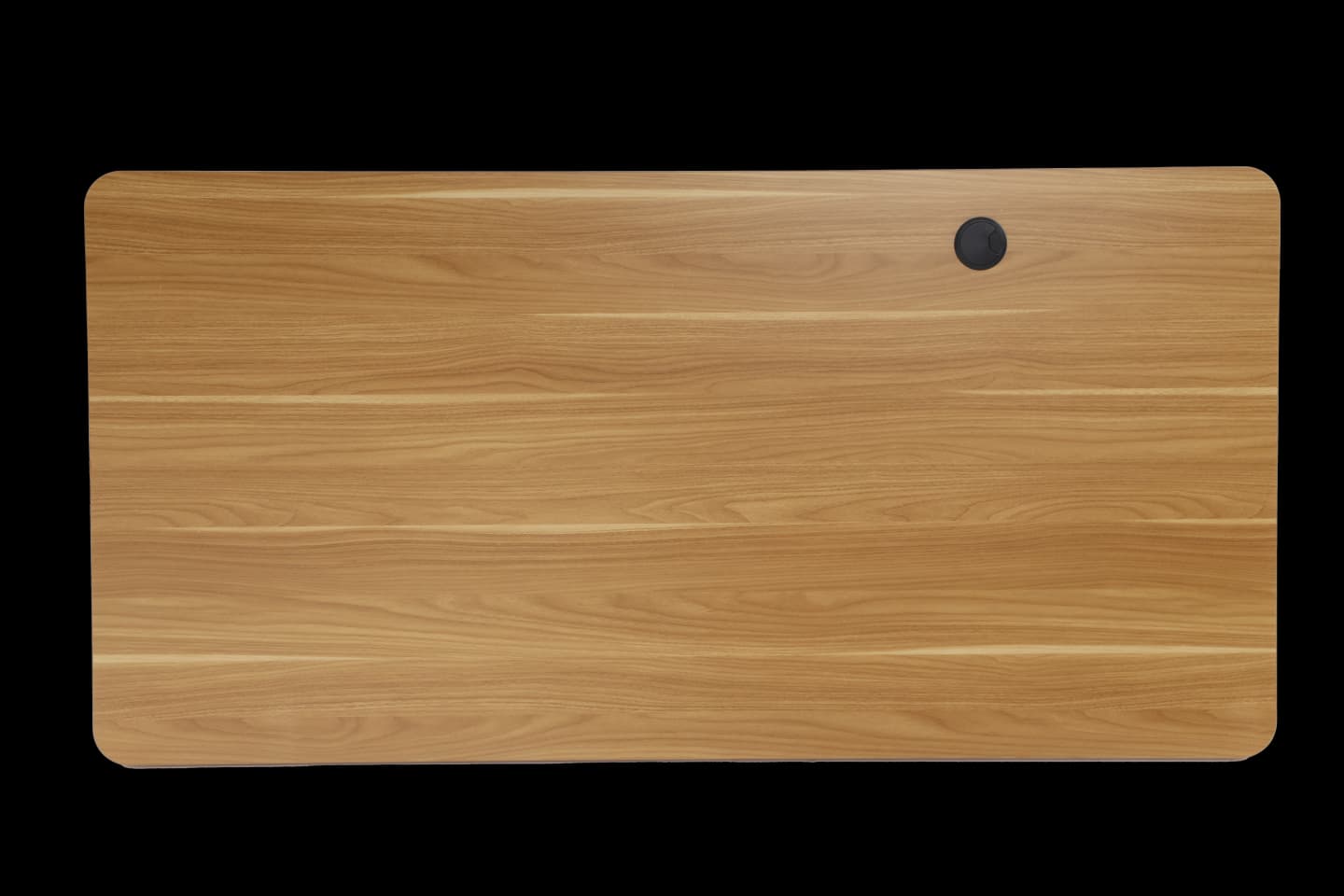
Materials compared: melamine, veneer, solid wood and bamboo
A "wooden tabletop" can mean four very different things. The material decides how long the tabletop will last, how much weight it puts on the frame and how much it will cost:
| Melamine on engineered wood | Veneer | Solid wood (oak, walnut) | Bamboo | |
|---|---|---|---|---|
| What it is | An engineered wood board with a hard decorative coating | A thin layer of real wood glued onto a board | Wood staves glued into a single panel | Compressed, glued bamboo strips |
| Scratch resistance | High | Medium | Medium, depending on the wood type and finish | High |
| Water resistance | Good on the surface. Sensitive at the edges if the edge banding is damaged | Sensitive to water marks | Good with oil or lacquer | Good with a suitable finish |
| Care | Wipe with a damp cloth | Gentle cleaning, no abrasive products | Oil or refresh the lacquer occasionally | Oil occasionally |
| Can be sanded and refinished | No | Very little | Yes, several times | Yes |
| Weight | Relatively light | Light to medium | Heavy | Heavy |
| Relative price | Low | Medium | High to very high | Medium to high |
What about "oak tabletops" and "walnut tabletops"? In most stores, ours included, the oak and walnut finishes on computer desk tops are a wood-grain melamine coating. You get the look of wood with the durability of melamine, at a much lower price than solid wood. A solid oak tabletop is a different product: much heavier, and several times more expensive.
18 mm melamine tabletops: what you get with ours
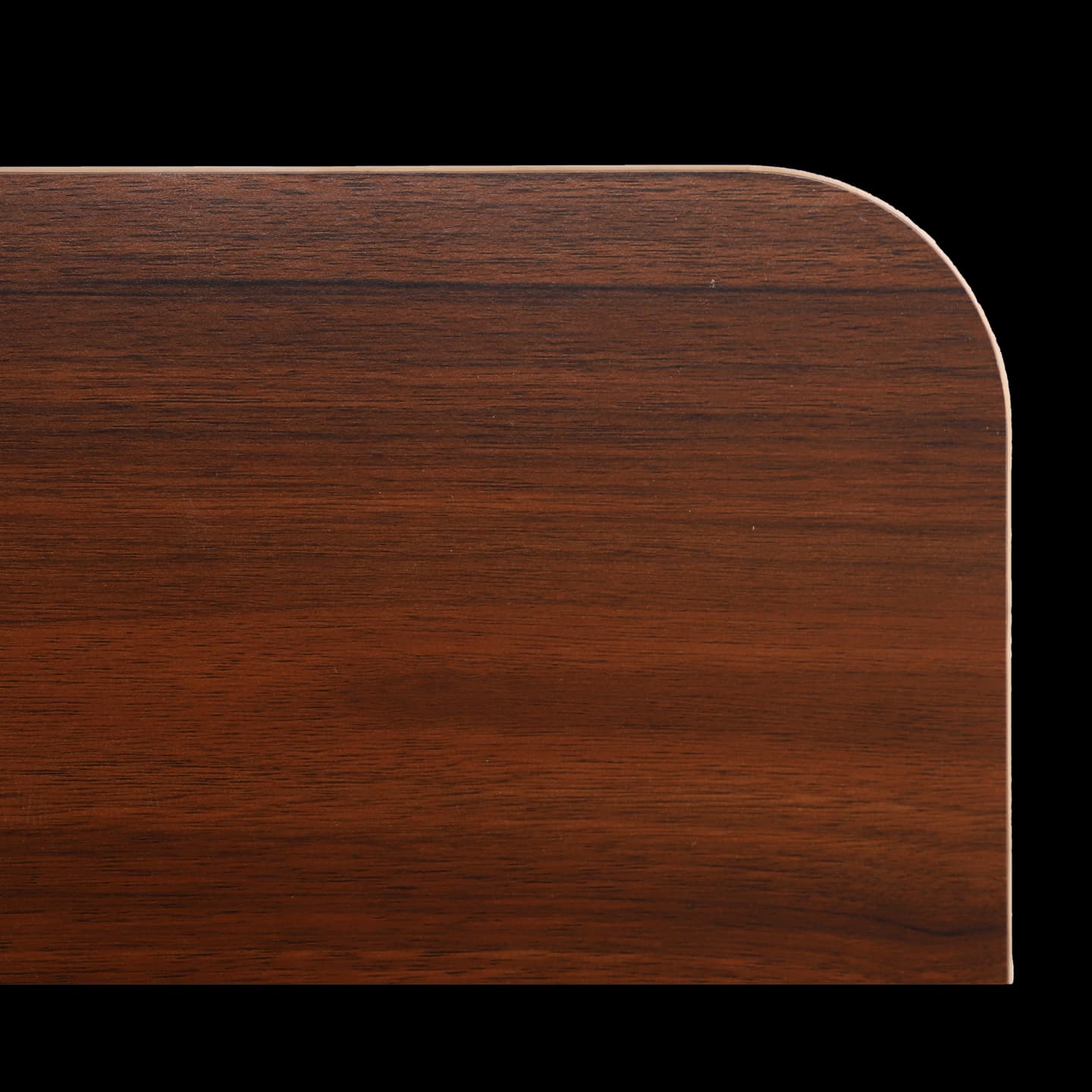
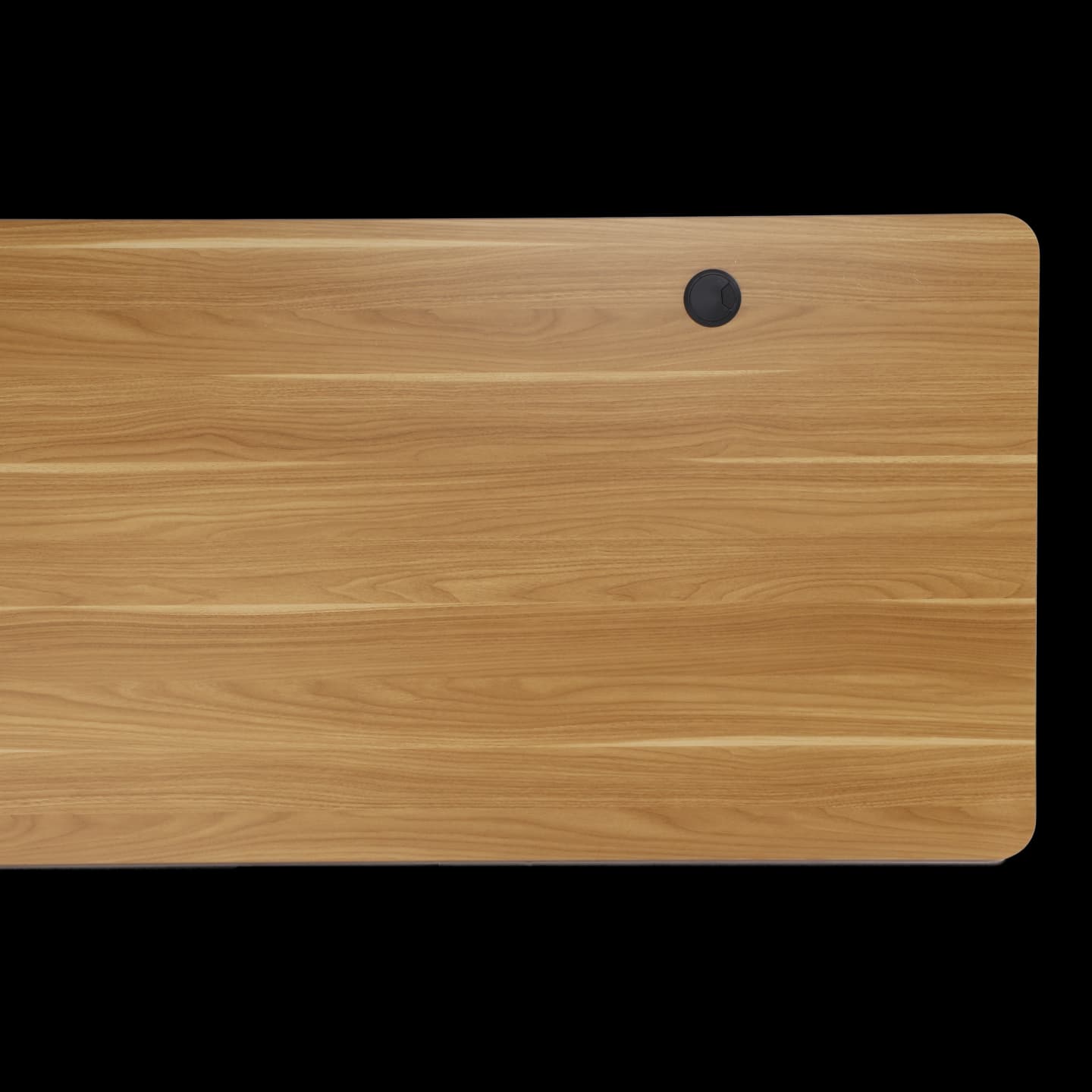
- Material: engineered wood with a scratch- and stain-resistant melamine coating, 1.8 cm thick.
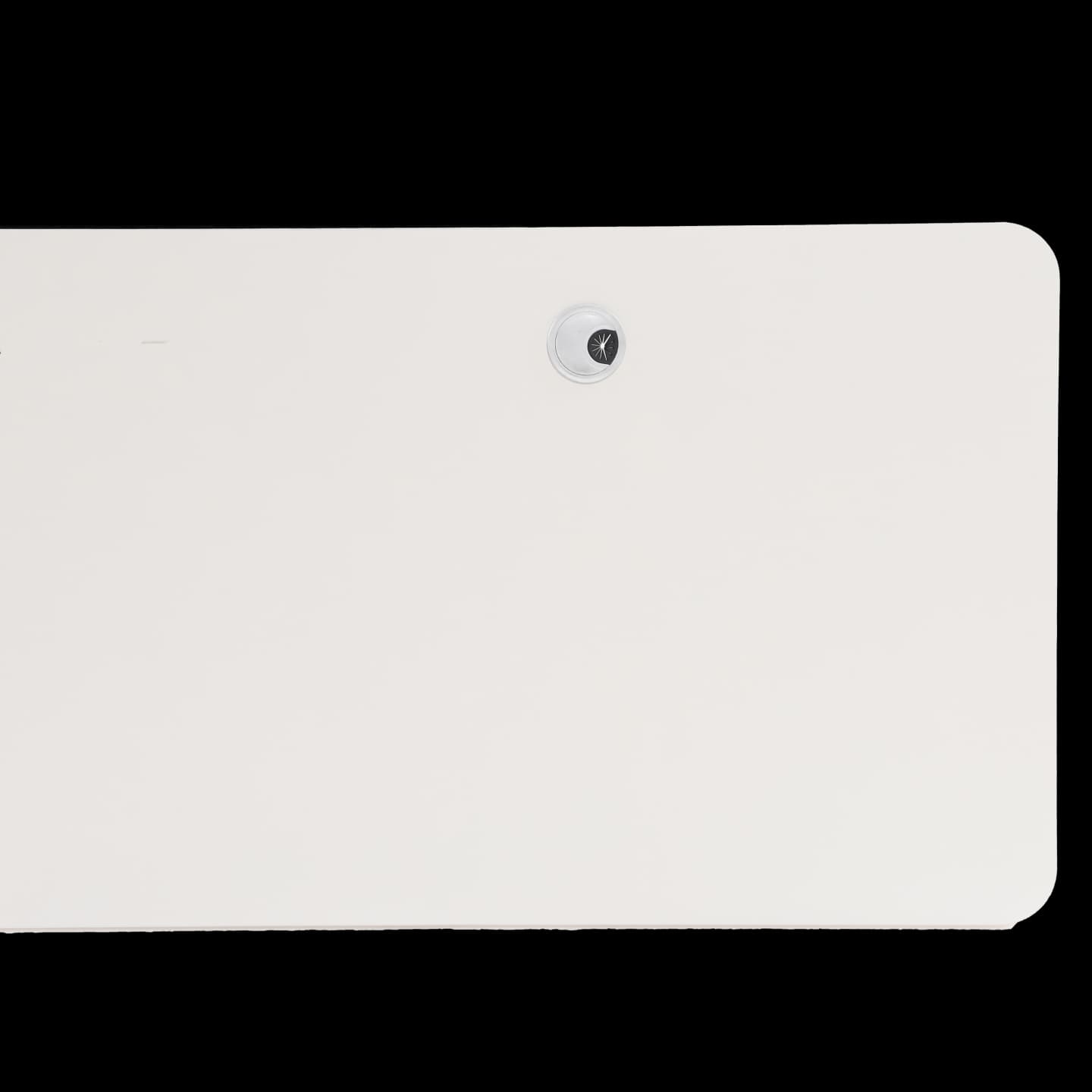
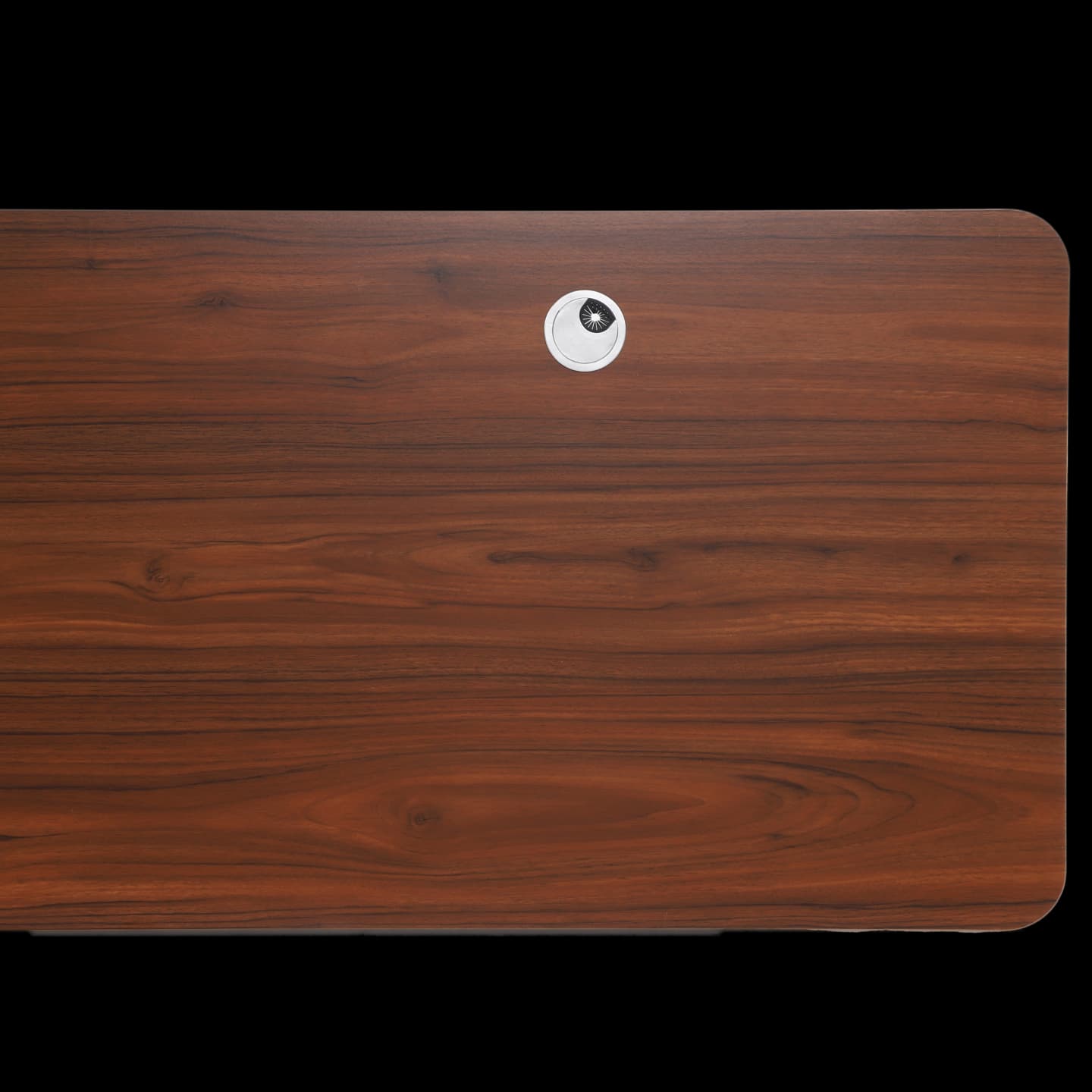
- Finishing: rounded corners and a cable grommet with a cover. OSHA recommends a desk with rounded edges, so your forearms don't rest on a sharp edge.
- No pre-drilled holes: the tabletop is reversible and fits any type of legs or frame. When you assemble it, you decide whether the cable grommet goes on the right or the left.
- Sizes: 120×60, 140×70, 160×80 and 180×80 cm.
Which size to choose, and how much it weighs
The equipment on your desk sets the size. Weight matters especially on an electric desk, because it counts toward the frame's lifting capacity:
| Size | What fits | Estimated weight (18 mm melamine) | Compatible frames |
|---|---|---|---|
| 120×60 cm | A laptop and a monitor | About 10 kg | S1, S2, Mars legs |
| 140×70 cm | Two 24-inch monitors, or a large monitor and a laptop | About 13 kg | S1, S2, Mars legs |
| 160×80 cm | Two 27-inch monitors, or an ultrawide monitor with room to write | About 17 kg | S1, S2, Mars legs |
| 180×80 cm | Three monitors, video editing or gaming | About 19 kg | S1, S2, Mars legs |
Weights are calculated from the typical density of engineered wood. A 2.5 cm solid wood or bamboo tabletop in 160×80 weighs about 23-25 kg.
Depth matters too: OSHA recommends placing your monitor at least 50 cm from your eyes. With a keyboard in front of the monitor, a depth of 60 cm is enough for a monitor up to 24 inches, and for a 27-inch monitor or larger, a depth of 70-80 cm is better.
Want to check the right desk height too? Our desk height calculator works it out based on your height.
A tabletop on an electric frame: weight, thickness and width
- Weight: the tabletop counts toward the lifting capacity. On the S1, which lifts up to 80 kg, a 160×80 tabletop (about 17 kg) leaves more than 60 kg for two or three monitors, a computer and speakers. The S2 lifts up to 120 kg and can also take a heavy solid wood tabletop and plenty of equipment.
- Width: the S1 frame and Mars legs fit tabletops 100-180 cm wide, and the S2 frame fits tabletops up to 2.2 m wide.
- Thickness: 18 mm or more allows the frame to be screwed in securely. In a thinner tabletop, the screws may poke through or work loose.
- Assembly: lay the tabletop upside down on a soft surface, center the frame on it and screw it in with a drill driver. With solid wood and bamboo, drill a thin pilot hole first.
- Cable grommet: place it on the side where your computer sits, and leave the cables enough slack for the full standing height.
Finishes: White, Oak, Light Oak, Walnut and Black
| Size | Finishes |
|---|---|
| 120×60 cm | White, Oak |
| 140×70 cm | White, Oak, Light Oak, Walnut, Black |
| 160×80 cm | White, Oak, Light Oak, Walnut |
| 180×80 cm | Oak |
Availability of each finish is kept up to date on the product page.
- White: brightens a small room and pairs well with white legs. A clean look, but it shows stains more.
- Oak and Light Oak: the most popular finishes for the home. They hide fingerprints and light scratches.
- Walnut: a dark, warm tone that looks great with black legs.
- Black: a modern look for a home office or gaming room. Dust shows more on it.
When a solid wood or bamboo tabletop is worth it
Solid wood and bamboo suit you if you want a natural material, a warm feel and a tabletop you can sand and refinish years later. The downside is weight and price: a 160×80 tabletop that is 2.5 cm thick weighs about 23-25 kg, so it is best paired with a dual-motor frame.
Our solid wood tabletop comes as part of the S2 Bamboo desk: a 2.5 cm solid bamboo tabletop, polished with rounded corners, in 160×80 or 180×80 cm, on a dual-motor frame that lifts up to 120 kg.