
Recommended Desk Height: A Calculator Based on Your Height
In short
The right desk height is your elbow height, with your shoulders relaxed and your arms bent at about 90 degrees. If you are 1.75 m tall, that is about 70 cm sitting and 109 cm standing. A standard 72-75 cm desk mostly suits people who are 1.80 m or taller. For everyone else, an adjustable desk is the better choice, or a chair and footrest that make up the difference.
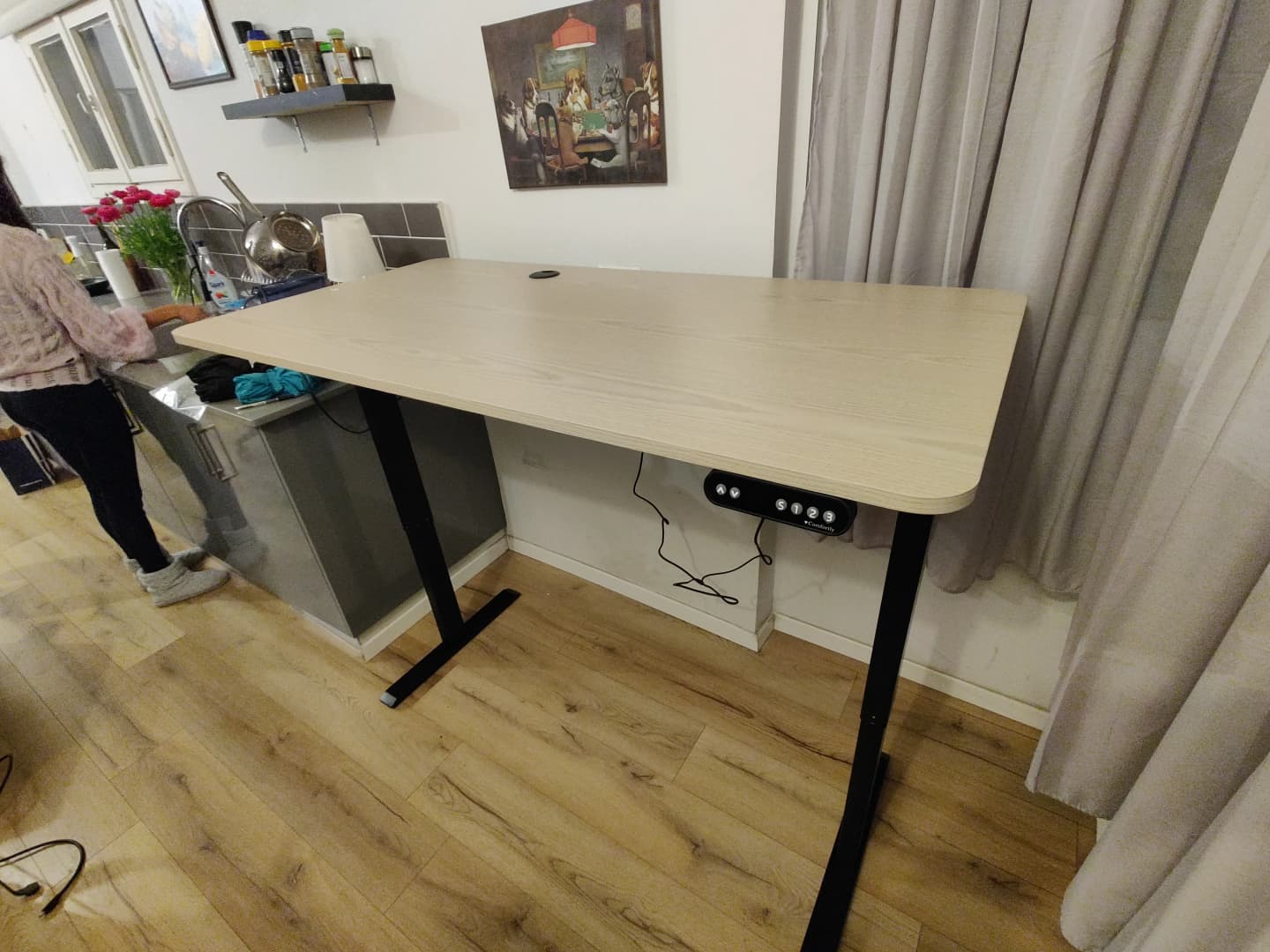
Desk Height Calculator Based on Your Height
Enter your height to get your desk height for sitting and standing, your chair seat height, and where the top of your monitor should be. The calculator also shows which adjustable desks reach the heights you need.
Desk, chair and monitor height calculator
- Desk height when sitting
- 68 cm
- Desk height when standing
- 106 cm
- Chair seat height
- 45 cm
- Top of screen when sitting
- 121 cm
- Top of screen when standing
- 159 cm
Desks that reach these heights
- S2 dual-motor (60-125 cm)Sitting: ✓ FitsStanding: ✓ Fits
- S1 single-motor (70-115 cm)Sitting: ✓ With a raised chairStanding: ✓ Fits
- Sun single-motor (71-115 cm)Sitting: ✓ With a raised chairStanding: ✓ Fits
Results are an estimate based on average body proportions, with regular shoes and elbows at 90 degrees. Fine-tune by feel. "With a raised chair" means the desk's lowest height is a few centimeters above your ideal sitting height: raise the chair by the same amount and add a footrest if your feet don't reach the floor, just as you would with a regular desk.
Desk Height Chart by Body Height
The chart is based on standard body proportions and assumes regular shoes. If you fall between two rows, take the average and fine-tune from there by feel: elbows at 90 degrees, shoulders down, wrists straight.
| Your height | Sitting desk height | Standing desk height | Chair seat height | Seated eye level (top of monitor) |
|---|---|---|---|---|
| 150 cm | 60 cm | 94 cm | 40 cm | 107 cm |
| 155 cm | 62 cm | 97 cm | 41 cm | 111 cm |
| 160 cm | 64 cm | 100 cm | 42 cm | 114 cm |
| 165 cm | 66 cm | 103 cm | 43 cm | 117 cm |
| 170 cm | 68 cm | 106 cm | 45 cm | 121 cm |
| 175 cm | 70 cm | 109 cm | 46 cm | 124 cm |
| 180 cm | 72 cm | 113 cm | 47 cm | 128 cm |
| 185 cm | 74 cm | 116 cm | 48 cm | 132 cm |
| 190 cm | 76 cm | 119 cm | 50 cm | 135 cm |
| 195 cm | 78 cm | 122 cm | 51 cm | 139 cm |
| 200 cm | 80 cm | 125 cm | 52 cm | 142 cm |
All measurements are from the floor. Desk height means the height of the surface your keyboard and mouse sit on.
How to Measure Your Ideal Desk Height Yourself
The calculator gives you a good starting point, but every body is different. Leg length, torso length and shoes can shift the result by a few centimeters. Here is how to measure it exactly:
Set up your chair
Sit with your feet flat on the floor and your thighs parallel to the floor. Your knees should be at about 90 degrees.
Measure your seated elbow height
Relax your shoulders, bend your elbows to 90 degrees and measure from the floor to the underside of your forearm. That is your sitting desk height.
Measure your standing elbow height
Stand in the shoes you work in, keep the same arm position and measure again. That is your standing desk height.
Position your monitor
Place the top of the screen at eye level or slightly below, about an arm's length away (50-75 cm). With a large monitor or progressive lenses, set it a few centimeters lower.
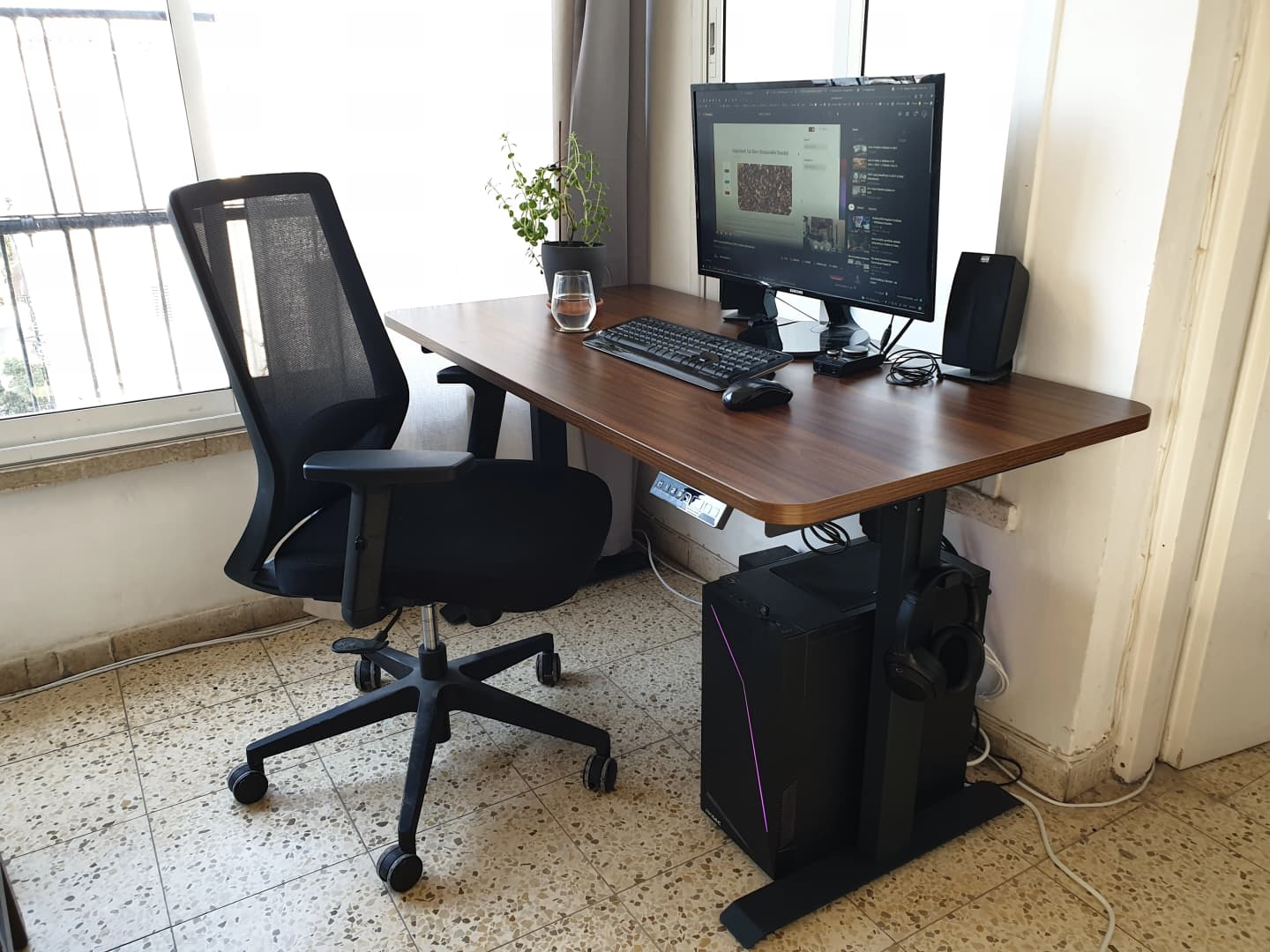
Why a Standard Desk Height (72-75 cm) Doesn't Fit Everyone
Most writing and computer desks in Israel are made at a fixed height of 72-75 cm. According to the calculator, that is the right sitting height for people who are 1.80-1.87 m tall. If you are shorter, the desk is too high: your shoulders rise, your wrists bend and the strain moves to your neck.
| Your height | Recommended sitting height | Difference from a 74 cm desk |
|---|---|---|
| 155 cm | 62 cm | 12 cm too high |
| 165 cm | 66 cm | 8 cm too high |
| 175 cm | 70 cm | 4 cm too high |
| 185 cm | 74 cm | Just right |
Standing height isn't one-size-fits-all either: the gap between a 1.60 m user and a 1.90 m user is about 19 cm. That is why a standing desk needs a wide height range, not just a motor.
Desk Dimensions: Width and Depth
Height is only half the story. When you choose a work desk, the tabletop size matters just as much, and on a writing desk the width and depth decide how comfortable it is to work. Width sets how much equipment fits, and depth decides whether you can keep the screen far enough from your eyes. As a rule, a 27-inch monitor or larger needs a depth of 70-80 cm.
| Workstation | Recommended width | Recommended depth | Matching tabletop size |
|---|---|---|---|
| Laptop only | 100-120 cm | 60 cm | 120×60 |
| Laptop and one monitor | 120-140 cm | 60-70 cm | 140×70 |
| Two monitors | 140-160 cm | 70-80 cm | 160×80 |
| Three monitors, editing or gaming | 160-180 cm | 80 cm | 180×80 |
All of these sizes are available as desk tabletops and as part of our adjustable desks. The differences between melamine, solid wood and bamboo are covered in our tabletop materials guide.
Have a Fixed-Height Desk? Here's How to Fix the Height
- Desk too high: Raise your chair until your elbows are level with the desk, and add a footrest if your feet no longer reach the floor.
- Screen too low (especially on a laptop): Put the screen on a monitor riser shelf, or connect an external keyboard and mouse and raise the laptop.
- Desk too low: Leg risers are a temporary fix. In the long run, it is better to replace only the legs with an electric desk frame and keep your existing tabletop.
- You want to work standing too: There is no way to do this properly at a fixed desk. You need an adjustable desk that reaches your standing height.
Which Adjustable Desks Fit Your Height
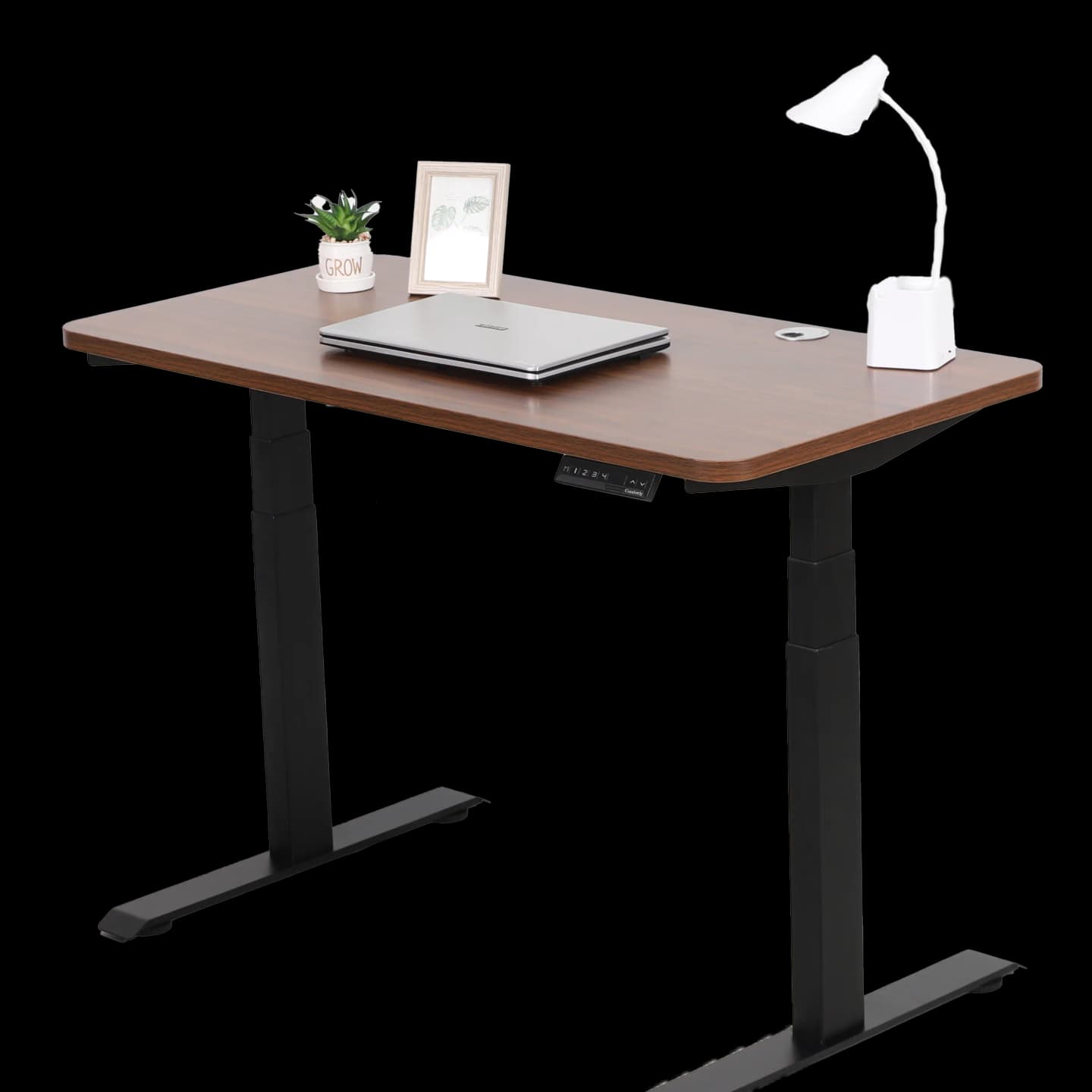
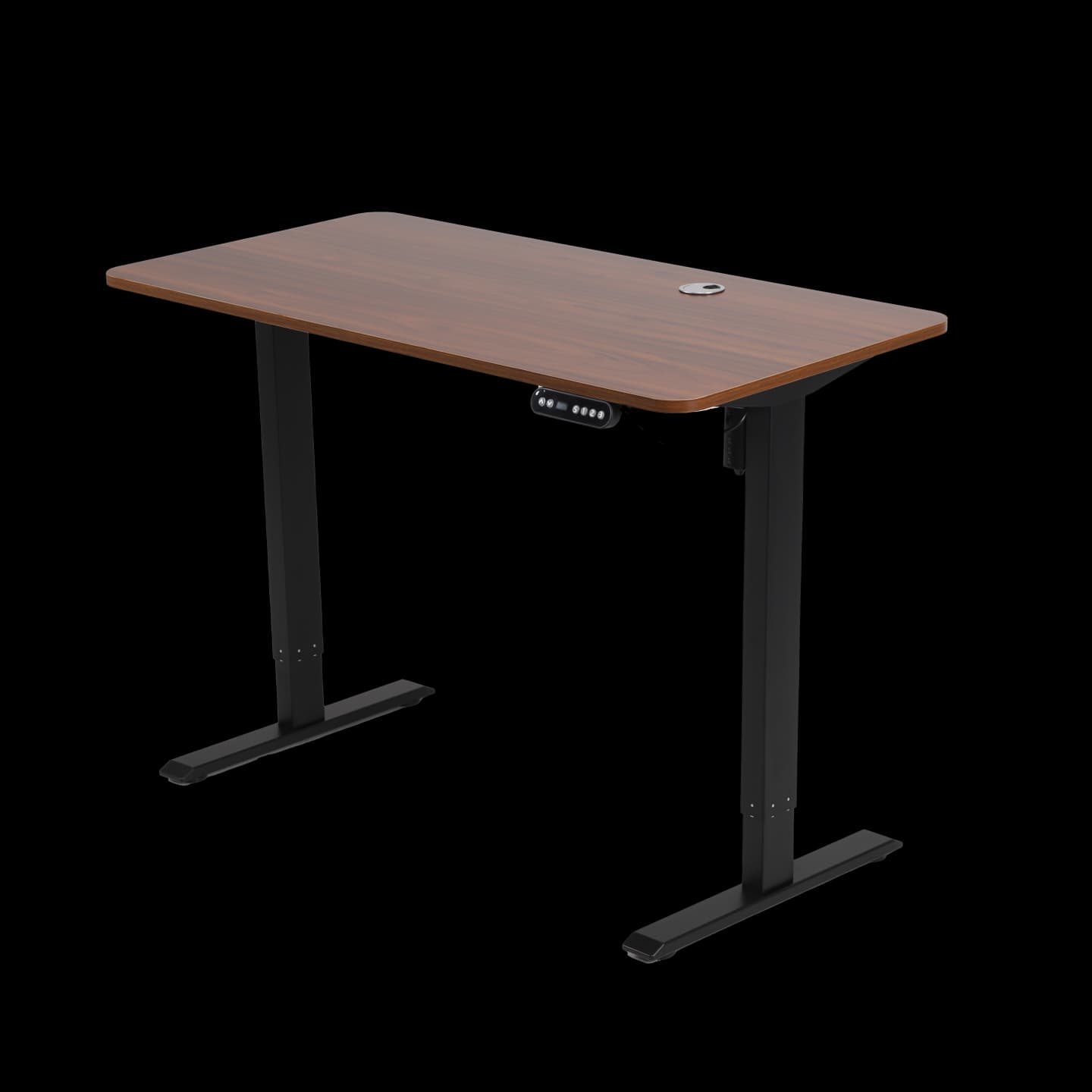
The desk's height range needs to cover both your sitting height and your standing height. Here is how our models compare:
| Model | Height range | Sitting: fits users | Standing: fits users |
|---|---|---|---|
| S2 dual-motor | 60-125 cm | Any height from 1.50 m | Up to 2.00 m |
| S1 single-motor | 70-115 cm | 1.75 m and up, or from 1.55 m with a raised chair | Up to 1.90 m |
| Sun single-motor | 71-115 cm | 1.78 m and up, or from 1.58 m with a raised chair | Up to 1.90 m |
The S1 goes down to 70 cm, which is lower than a regular writing desk (72-75 cm). If you are shorter than 1.75 m, you sit at it just like at a regular desk: raise your chair a little and add a footrest if needed. Standing, the S1 reaches 115 cm, which suits users up to 1.90 m. If you are taller, or you want the full range with no adjustments, the S2 goes up to 125 cm and down to 60 cm.
Common Workstation Height Mistakes
- A low chair at a standard desk: Your shoulders rise to reach the keyboard, and after a few hours you feel it in your neck and shoulder blades.
- A laptop flat on the desk: The screen is too low and your head tilts forward. This is one of the most common causes of neck pain when working from home.
- A standing desk set too high: Your wrists bend upward. When standing, the desk should be at elbow height, not chest height.
- Raising the chair without a footrest: Your feet dangle, the front edge of the seat presses behind your knees and sitting becomes uncomfortable.
- Not saving your heights: On an electric desk, save your sitting and standing heights as memory presets so switching takes a second.