
Adjustable Desks for Kids and Students: A Desk That Grows With Your Child
In short
A standard 72-75 cm desk is too high for most kids. Their shoulders hunch up, their feet dangle and their back curves. An electric adjustable desk grows with your child: you set it to the right height today and raise it a little every year, with no need to buy a new desk. Our lowest model is the S2, which goes down to 60 cm, so it works for seated use from a height of about 130 cm (with a raised chair and a footrest). The S1 and Sun suit seated use mainly for teens, from a height of about 155 cm.
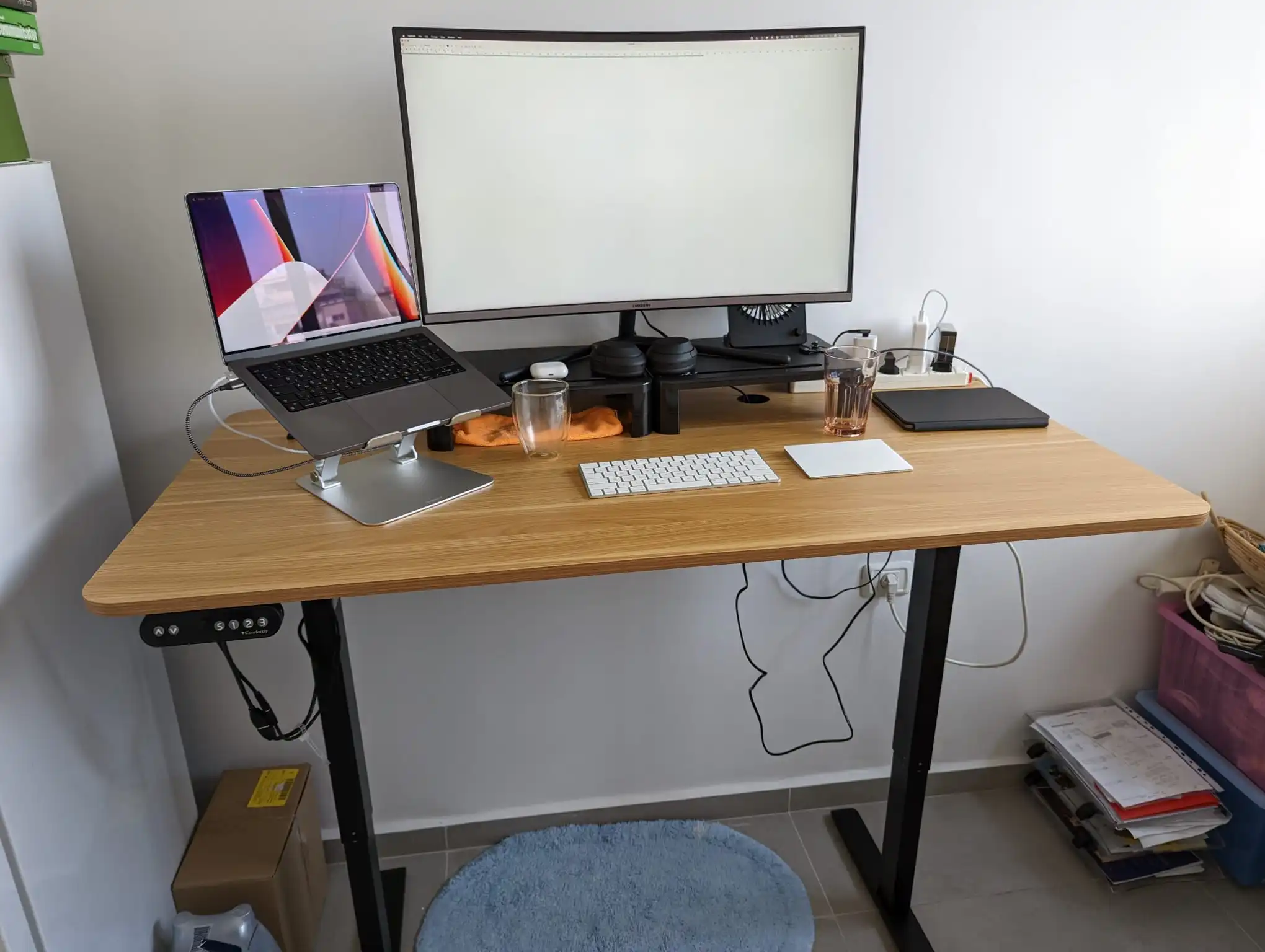
Why does a child need an adjustable desk?
A regular writing desk is designed for an adult of average height. A second grader needs a desk about 20 cm lower, while a high school student is almost adult height. Kids grow by dozens of centimeters during their school years, so a fixed-height desk only fits them for a short time.
- It grows with your child: you reset the height as your child grows, so one desk serves them from elementary school through high school.
- Correct posture for homework: elbows at about 90 degrees, relaxed shoulders and feet flat on the floor or on a footrest.
- Switching to standing: standing desks for students let them stand while reading, drawing or gaming, and break up long periods of sitting. The World Health Organization recommends that children and teens limit long periods of sitting, especially screen time.
- Several kids, one desk: with memory presets, each child saves their own height at the touch of a button.
What desk height is right for a child? A table by age
The table is based on the average height for each age according to the World Health Organization (WHO), and on the same formulas used by our desk height calculator. Children of the same age vary a lot in height, so measure your child and use the row closest to their height, not their age.
| Age | Average height | Seated desk | Chair seat | Standing desk | S2 seated | S1 seated |
|---|---|---|---|---|---|---|
| 6 | 116 cm | 46 cm | 31 cm | 73 cm | Standing only | Standing only |
| 8 | 127 cm | 51 cm | 34 cm | 79 cm | Standing only | Standing only |
| 10 | 138 cm | 55 cm | 37 cm | 86 cm | With a raised chair and footrest | Standing only |
| 12 | 150 cm | 60 cm | 40 cm | 94 cm | Fits | Standing only |
| 14 | 162 cm | 65 cm | 43 cm | 101 cm | Fits | With a raised chair and footrest |
| 16 | 168 cm | 67 cm | 44 cm | 105 cm | Fits | With a raised chair and footrest |
The S2 goes down to 60 cm, the S1 to 70 cm and the Sun to 71 cm. "With a raised chair and footrest" means raising the chair by up to 8 cm and placing a footrest under your child's feet.
Which adjustable desk is best for a growing child?
The most important spec in a kids desk is the minimum height. The lower the desk goes, the younger the age it suits for sitting. For standing, all models fit almost any age: the S2 from a height of about 96 cm, and the S1 and Sun from about 112 cm.
| Model | Minimum height | Seated, no adjustments | Seated, with a raised chair | Best for |
|---|---|---|---|---|
| S2 dual-motor | 60 cm | From 150 cm tall | From 130 cm tall | Kids from 3rd-4th grade up to army age: the desk that grows with your child |
| S1 single-motor | 70 cm | From 175 cm tall | From 155 cm tall | Teens, and a standing desk for younger kids |
| Sun single-motor | 71 cm | From 178 cm tall | From 158 cm tall | A small teen room, with a child lock and anti-collision |
- An elementary school child with a lot of growing to do: the S2. It is our only model that goes down to 60 cm, and its range reaches 125 cm, so it will still fit when your child is an adult.
- A teen who is 1.55 m or taller: the S1 is enough and better value. 3 memory presets and tabletops from 120×60 to 160×80.
- A small room and younger siblings at home: the Sun in 120×60, with a child lock and an anti-collision system.
Safety: an electric standing desk in a home with kids
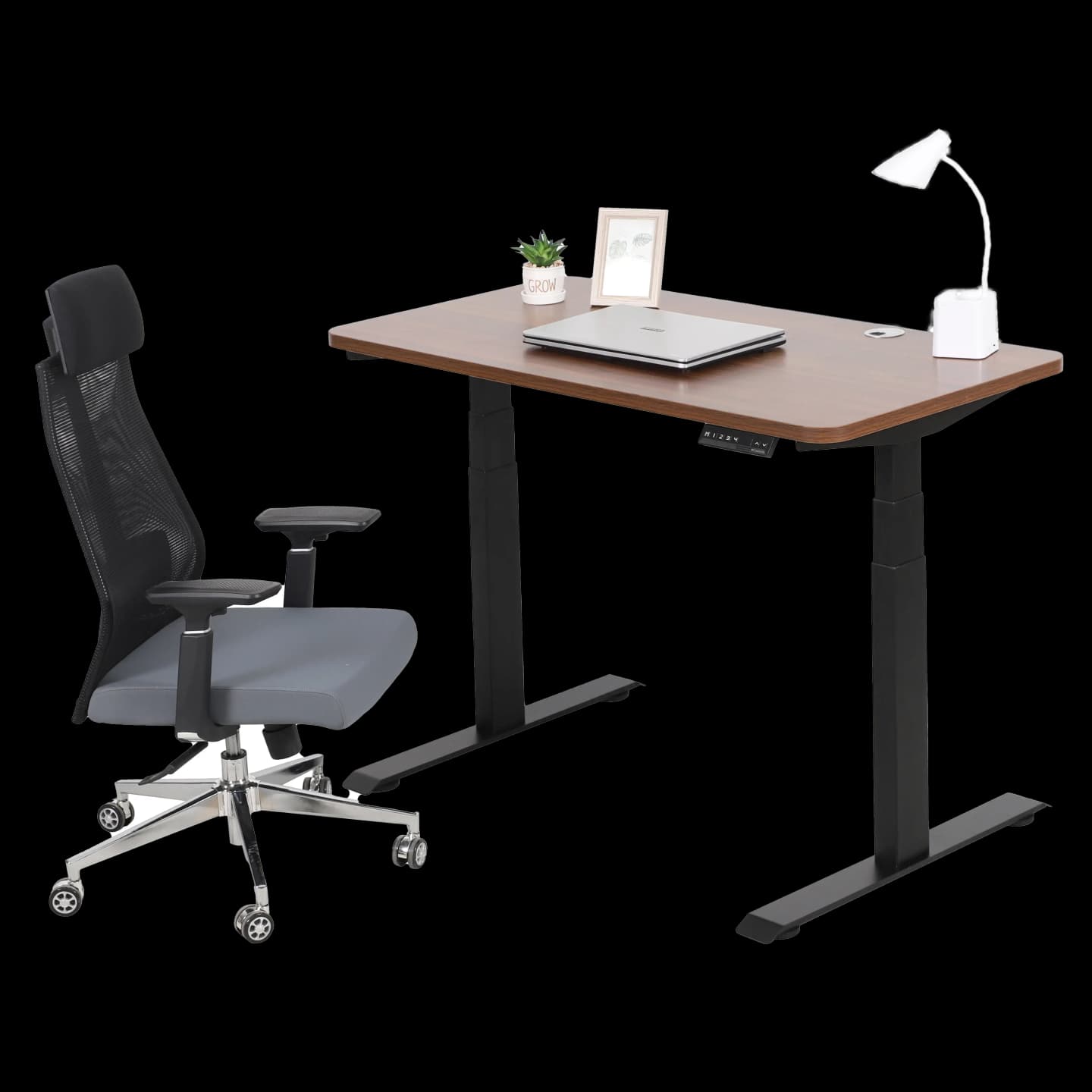
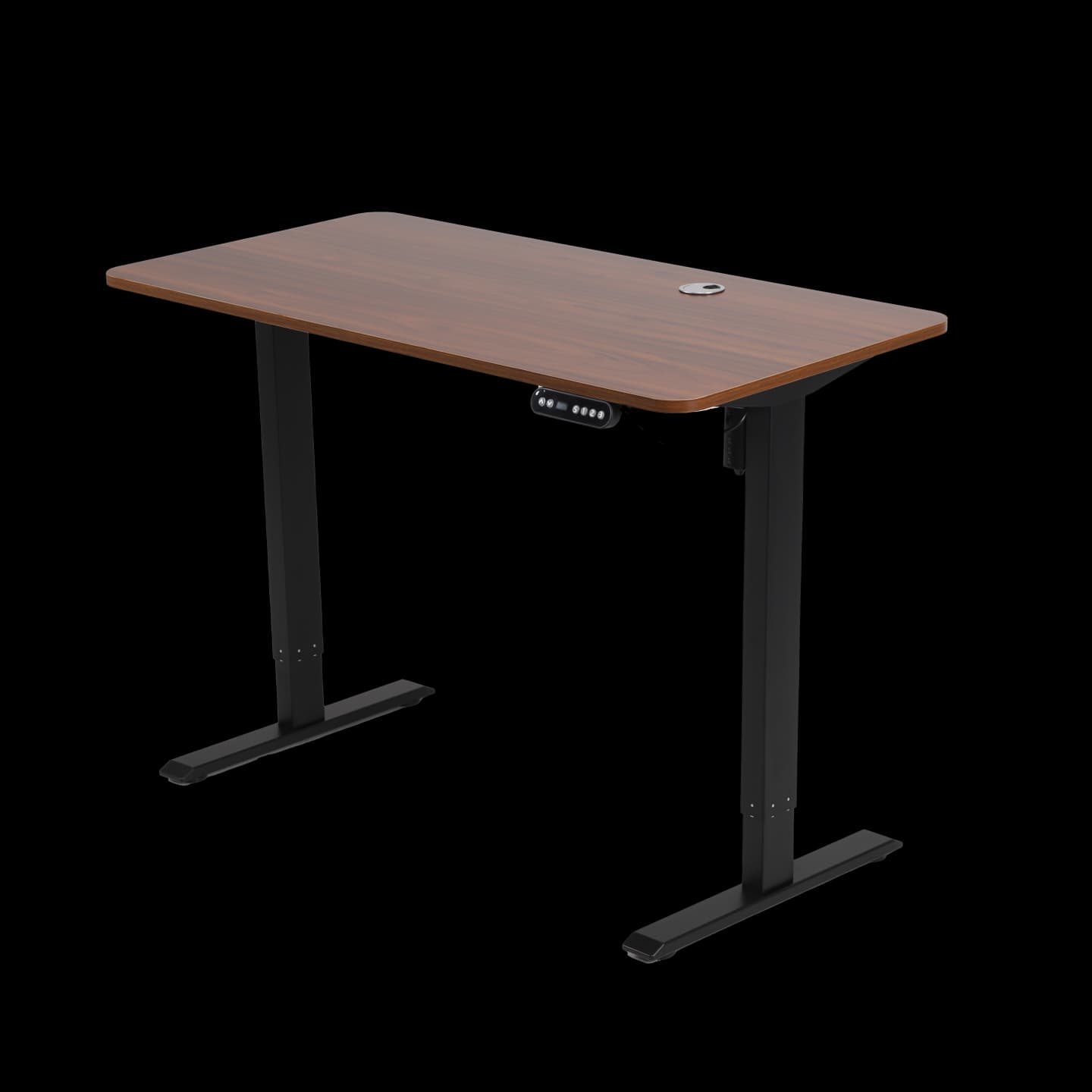
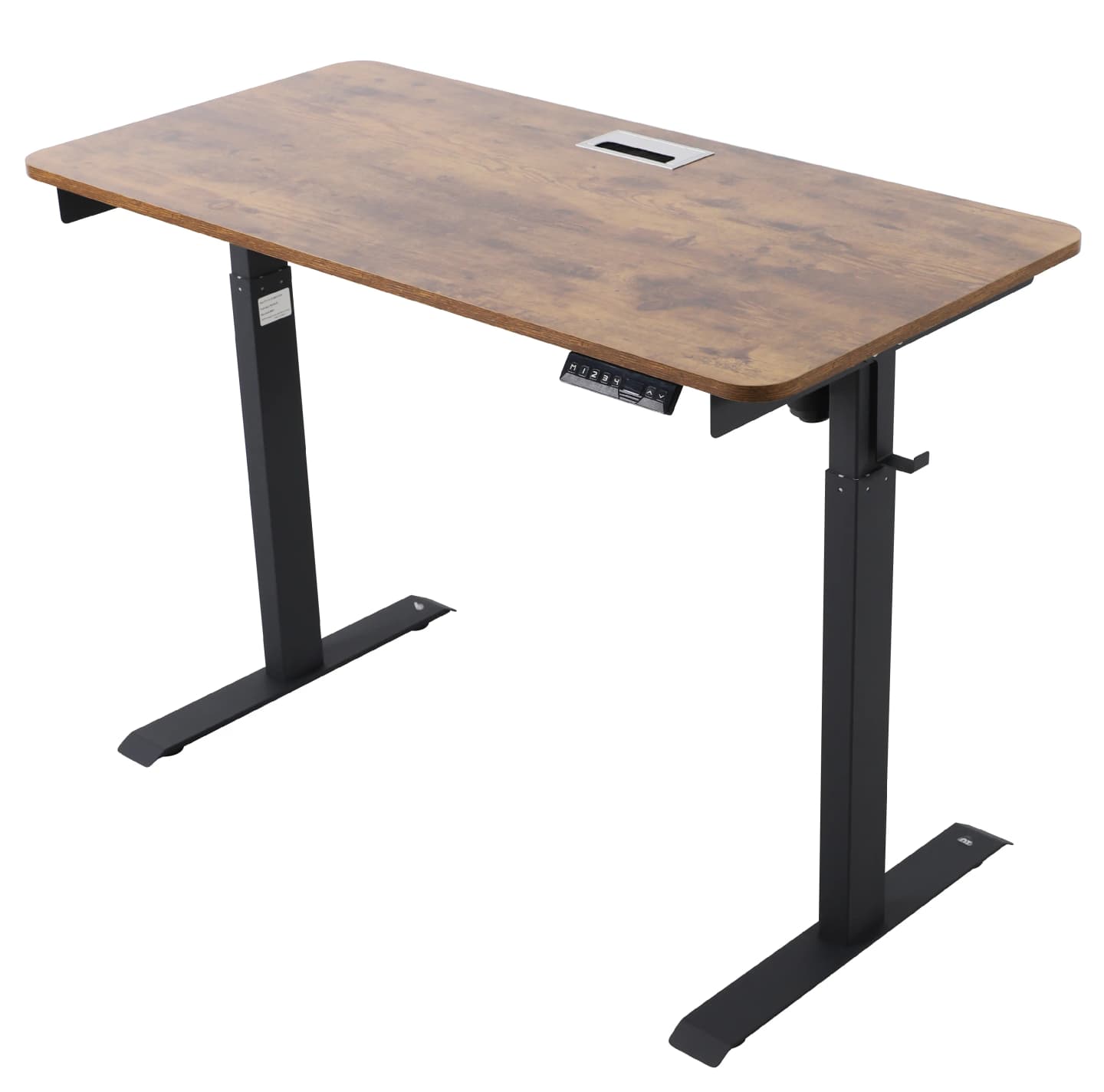
- Child lock: locks the control panel so a child can't move the desk by accident. It is built into the Sun.
- Anti-collision system: stops the desk if it hits an obstacle while moving. Available on the Sun and the S2.
- Small children at home: if your desk has no lock, unplug it when it's not in use, and don't leave a small child alone next to a moving desk.
- Under the desk: before you lower it, make sure there is no chair, drawer or hand underneath.
- Cables: run computer and power cables along the leg and into a cable tray, so they don't get caught when the desk rises.
- No sitting on the desk: the desktop is not made for sitting or climbing on, and certainly not while it's moving.
How to set up an ergonomic homework corner
Adjust the chair
Feet flat on the floor and knees at about 90 degrees. If the chair doesn't go low enough, place a footrest under your child's feet.
Adjust the desk
The desktop should be at elbow height with relaxed shoulders. Save the height as a memory preset.
Position the screen
At eye level or slightly below, about an arm's length away. With a laptop, add a stand and an external keyboard, or a monitor riser shelf.
Save a standing height
Set another memory preset for standing, based on the table. Standing for part of the time, for example while reading or watching a recorded lesson, breaks up sitting.
Check again every few months
Kids grow fast. When the shoulders start to rise or the knees hit the desk, it's time to raise the height.
What size student desk do you need? For homework with a laptop and books, a 120×60 cm tabletop is enough. For a student with a monitor, a laptop and room to write, a 140×70 cm tabletop is better. We cover tabletop materials and sizes in our desk tabletop guide.